
Featured Properties

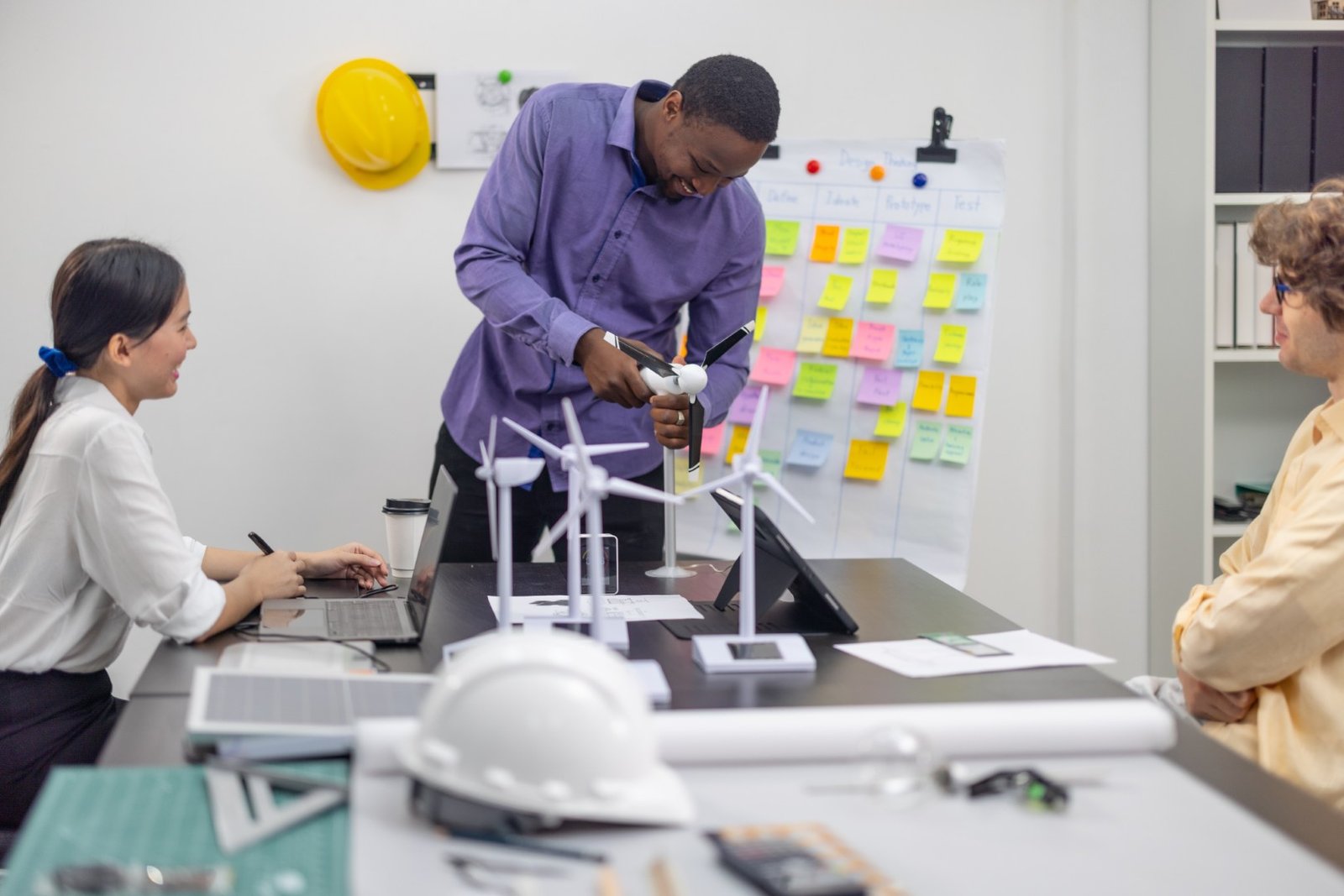
What is Engineering Design
Building a home in Africa from abroad is more than just a construction project, it’s a deeply personal journey, a way to connect with your roots and create a lasting legacy for your family. This dream, however, can feel fraught with risk.
We’ve all heard the heartbreaking stories of half-finished projects, wasted savings, and even structurally dangerous buildings. The single most powerful tool you have to prevent this from happening to you is professional engineering design.
This isn’t just about drawing floor plans, it’s a meticulous process that transforms your vision into a safe, valuable, and enduring home. It is the solid ground upon which your entire investment rests.
Important Notes
- Engineering design is a structured problem-solving process used by engineers to create solutions that meet specific needs, constraints, and performance goals. In simpler terms, Engineering design is how engineers turn ideas into real, working products, systems, or structures.
- Think of professional engineering design not as a cost, but as your first and best investment. It saves an average of 15-25% on total construction costs by ensuring efficiency and preventing costly rework.
- The safety of your family is paramount. Studies show that over 85% of building collapses in some African nations are directly linked to a lack of professional engineering, a risk you simply can’t afford to take.
- A well-engineered home is a more valuable asset. It commands a higher market price, typically 10-20% more than comparable buildings that lack professional documentation.
- For those of us in the diaspora, trusted partners like Propy Mould use modern tools like BIM and project management software to give you complete transparency and control over the entire process, no matter where you are in the world.
- Foundational steps like a Geotechnical Survey are absolutely non-negotiable in Africa. They are crucial for preventing the kind of foundation problems responsible for over 50% of structural failures in residential homes.
So… What Is Engineering Design
Engineering design is a structured problem-solving process used by engineers to create solutions that meet specific needs, constraints, and performance goals. In simpler terms, Engineering design is how engineers turn ideas into real, working products, systems, or structures.
The Engineering Design Process
- Identify the problem – What needs to be solved?
- Research & understand requirements – Who is it for? What are the limits (cost, size, safety, materials)?
- Brainstorm solutions – Generate multiple ideas.
- Select the best solution – Based on performance, cost, feasibility, and safety.
- Design & model – Create drawings, simulations, or prototypes.
- Build a prototype – A test version of the solution.
- Test and evaluate – See what works and what doesn’t.
- Improve and redesign – Make it better based on feedback and results.
Engineering Design Is Important For Your Building Construction Project, Here’s Why
Secure Your Money and Investment
A properly engineered design is your first and most effective defense against wasting your hard-earned money. It directly prevents the expensive and frustrating process of having to demolish and rebuild parts of your home, makes sure every single building material is used wisely, and provides an accurate budget through a detailed Bill of Quantities (BoQ).
This disciplined, upfront approach typically saves our clients an average of 15-25% on their total construction costs. While the initial investment for a complete engineering design is around 3-5% of your total project budget, the return on that investment is massive.
When you factor in the savings, the assurance of safety, and the increased property value, that initial investment can deliver a return of over 500% during the life of your home. Trying to build without this professional blueprint is a classic case of being penny wise and pound foolish, setting you up for far greater costs and heartache down the line.
Guarantee Safety and Legal Compliance
The safety of your family and loved ones is something you can never compromise on. Professional engineering design is what ensures your home is structurally sound, fully capable of withstanding local weather conditions and the simple test of time.
It also guarantees that your project meets all local African building regulations and codes, which can differ greatly from one country to the next. This not only protects the people inside from physical harm but also protects you, the owner, from devastating legal and financial liabilities.
The consequences of cutting corners here are truly severe. As studies have shown, over 85% of building collapses in some African nations can be traced directly back to either a complete lack of professional structural advice or a willful decision to ignore it. Proper engineering completely eliminates this catastrophic risk.
Increase Your Property’s Long-Term Value
A home built with professional engineering oversight is more than just a place to live, it becomes a high-performing real estate asset. When your building is backed by complete engineering documentation, including all the blueprints and structural reports, it naturally commands a higher valuation in the market.
These properties are far easier to get insurance for and are significantly more appealing to future buyers or mortgage lenders, who will always require proof of the home’s structural integrity. This professional stamp of approval translates directly into financial gain.
A well-documented, professionally designed property can sell for 10 – 20% more on the resale market compared to one built without that clear engineering oversight, making it a much smarter long-term investment.
Achieve Peace of Mind from Abroad with Propy Mould
Trying to manage a construction project from thousands of miles away comes with a unique set of challenges. Everything hinges on trust, transparency, and clear communication. This is where Propy Mould becomes your trusted eyes and ears on the ground.
We are here to manage the entire complex engineering design and construction process on your behalf. We find, vet, and manage qualified, certified engineers to ensure every single stage of your project meets the highest possible standards.
Our process is built to guarantee quality, give you complete transparency, and ensure we strictly follow your vision and your budget. We take the stress and uncertainty out of building from the diaspora, allowing you to watch your dream home take shape with confidence and total peace of mind.
At Propy Mould, we are your trusted partners in the engineering design process. We manage every detail, from the very first soil test to the final handover, with the transparency and expertise you deserve.
We bring together the best local engineers and leverage modern technology to ensure your project is built right, on time, and on budget. Let us help you turn your vision into a concrete reality, securely and with complete peace of mind.
Common Questions Asked
What is the difference between an architect and an engineer in construction?
An architect is the artist and visionary, while the engineer is the scientist who makes the vision a safe reality. The architect focuses on the aesthetic, the flow of the rooms, and how the space will function for your lifestyle. They create the floor plans and the overall look and feel of your home.
The engineer, specifically a structural engineer, then takes that beautiful design and uses physics and math to make sure it’s buildable and strong. They design the building’s “skeleton”, the foundation, beams, and columns, to ensure it can stand up to all physical forces. So, while the architect designs the space you live in, the engineer makes sure that space will remain standing for generations to come.
Why is a geotechnical survey so important in Africa?
A geotechnical survey, or soil test, is absolutely critical in Africa because of the continent’s wonderfully diverse but often challenging soil conditions. Many regions have what we call “problem soils,” like the expansive black cotton soil common in East Africa that swells and shrinks dramatically with rain and dry seasons, or the collapsible laterite soils in West Africa.
Building a foundation without understanding the specific soil you’re on is one of the main causes of structural failure. A geotechnical report gives the engineers the data they need to design the right kind of foundation, preventing devastating issues like cracking walls, sinking floors, and even total collapse. The American Society of Civil Engineers (ASCE) confirms that many of these problems are linked to not doing a proper site investigation first.
How much does engineering design cost for a residential project?
For a typical residential project, the cost for a comprehensive engineering design package usually falls between 3% and 5% of the total construction budget. This fee covers the expert work of the structural, civil, and MEP engineers and includes all the necessary analysis, drawings, and documents like the Bill of Quantities.
While it might seem like a big upfront cost, it’s truly one of the smartest investments you can make. Analysis from firms like McKinsey shows that proper planning and engineering can reduce your total project costs by 15-25% by eliminating expensive rework, optimizing how materials are used, and preventing shocking budget overruns.
Can I use building plans I bought online for my project in Africa?
Using generic building plans that you bought online for a project in Africa is extremely risky, and we strongly advise against it. Those plans were not designed for your specific plot of land and have no way of accounting for your local soil conditions, which demand a custom foundation design.
On top of that, building codes, regulations, and even the specifications of available materials vary drastically from one African country to another, and sometimes even between different towns.
A generic plan will not be compliant, which can lead to serious legal trouble and, more importantly, create major safety hazards. Your project needs and deserves a site-specific design created by professionals who know the local landscape.
What is a Bill of Quantities (BoQ) and why is it essential for my budget?
A Bill of Quantities (BoQ) is a highly detailed document, prepared by an engineer or quantity surveyor, that lists out every single material, part, and bit of labor needed to build your home.
It specifies the exact quantities of everything, from the number of cement bags and tonnes of steel rebar to the number of light switches and metres of plumbing pipe. For an investor in the diaspora, the BoQ is your most powerful tool for financial control.
It gives you a transparent, line-by-line breakdown of all the costs, allowing you to create an accurate budget, fairly compare quotes from contractors, and prevent surprise expenses or price gouging during the project.
How does Propy Mould ensure the engineers they work with are qualified and reliable?
At Propy Mould, we have a very strict vetting process for every professional we bring onto a project. We meticulously verify the credentials, licenses, and professional registrations of every engineer with their relevant national bodies, like the local engineering registration board.
We also carefully review their portfolio of past projects, check references from former clients, and make sure they carry adequate professional indemnity insurance.
Our process is designed to select experts who have a proven track record of reliability and excellence in their local construction environment, so you can have complete confidence that your project is in capable and trustworthy hands.
What happens if a design flaw is found during construction?
Discovering a design flaw during construction is precisely the kind of expensive nightmare that a proper, upfront engineering process is designed to prevent. However, if an unforeseen issue does come up, we immediately pause the project to address it correctly.
The supervising engineer will analyze the problem, redesign the part of the structure that’s affected, and issue revised drawings and instructions to the construction team. This almost always leads to delays and extra costs for demolition and rebuilding.
This is a perfect example of why modern digital modeling is so important, finding a flaw on a computer screen costs almost nothing to fix, but correcting that same mistake with concrete and steel on-site can cost thousands of pounds.
How does BIM technology help me as an investor living abroad?
Building Information Modeling (BIM) is an incredible tool for a diaspora investor because it allows us to create a complete 3D digital version of your home before we even break ground.
This model isn’t just a pretty picture, it’s filled with layers of data, from the exact specifications of the materials to cost information. BIM lets the entire team, architects, engineers, and builders, see how different systems (like plumbing, electrical, and structural supports) all fit together, which helps us spot potential “clashes” digitally.
For you, this means fewer expensive surprises and mistakes during the actual construction. It also provides a clear, detailed visual model that you can explore from anywhere in the world, ensuring the final home matches your vision perfectly. Studies published in journals by the ASCE show it significantly improves project delivery time.
Are building codes the same across all African countries?
No, building codes are definitely not the same across Africa. In fact, they can be very different from one country to another, and sometimes they even vary between different cities within the same country.
Each nation has its own set of rules that govern things like structural design, what materials can be used, fire safety, and sanitation. This is exactly why you can’t just take a plan designed for a house in Nigeria and use it to build in Ghana, for example.
It is absolutely essential to work with local, qualified engineers who are experts in the specific building codes for your project’s location to ensure everything is legal, safe, and built correctly.
What is the most common and costly mistake people make when they skip professional engineering design?
By far, the most common and costly mistake is building on a foundation that was designed improperly or not designed by a professional at all. The foundation is what connects your entire home to the ground, and its design must be based on the unique soil conditions of your plot.
When people skip the geotechnical survey and professional foundation design, it often leads to catastrophic structural failures like severe wall cracks, differential settlement (where parts of the house sink at different rates), or in the worst cases, a total collapse.
According to the Institution of Structural Engineers (IStructE), foundation issues are a leading cause of building failure and are extremely expensive, and sometimes impossible, to fix correctly after the house has already been built.
How does proper engineering design affect my property’s resale value?
Proper engineering design significantly boosts your property’s resale value because it serves as concrete proof of quality and safety. A home that comes with a complete set of engineering documents is seen as a much lower-risk investment by potential buyers, and it makes it much easier for them to get a mortgage.
This documentation acts as a hallmark of quality construction, giving future owners solid assurance of the building’s structural integrity. Because of this, professionally engineered properties can command a market price that is 10-20% higher than similar properties that were built without that professional oversight, ensuring a better return on your investment.
What is MEP engineering and why do I need it for my family home?
MEP stands for Mechanical, Electrical, and Plumbing engineering. These engineers design the vital systems that make your house a comfortable and functional home, you can think of them as the “circulatory and nervous systems” of the building.
Mechanical covers heating, ventilation, and air conditioning (HVAC). Electrical covers everything from the power supply and wiring to lighting and safety systems. Plumbing handles the clean water supply, drainage, and sanitation.
Getting MEP engineering done right is essential for your family’s comfort, safety, and for saving money in the long run. A well-designed system prevents common frustrations like overloaded electrical circuits, poor water pressure, or inefficient air conditioning. Energy studies have shown that good MEP design can even reduce a home’s lifetime utility bills by 25-40%.