
Featured Properties

What Is Casting In Building Construction
Building a home across an ocean is an exercise in trust. You send money, review plans on a screen, and hope the structure rising from the earth of your homeland is as solid as the capital you poured into it. In the middle of all this anxiety is a single moment that defines everything, casting.
This is when liquid potential becomes solid reality. If the casting is flawed, the building is compromised. If it’s precise, your legacy is secure. Knowing how this works changes you from a passive payer into an informed owner, ready to ask the hard questions that keep builders honest.
Key Points
- It’s the engineering process of pouring liquid concrete into a mold, called formwork, to create the structural parts of your building, like slabs, beams, and columns.
- You’ll choose between In-Situ (poured on your site) and Precast (made in a factory). Precast gives you speed and quality control, while In-Situ offers more design flexibility.
- A safe building depends on five strict steps, preparing the mold, placing the steel, pouring the concrete, curing it properly, and stripping the mold. Skipping even one can ruin your building’s integrity.
- Concrete gets 70% of its strength in the first week. In hot African climates, if it dries out too fast, it will crack and fail.
- New tech like 3D printing and self-healing concrete is already cutting waste and future maintenance costs for new buildings.
What is Casting?
Casting is the core construction process where a fluid material, almost always concrete, is poured into a prepared mold, or ‘formwork.’ It then cures and hardens into a specific structural shape. The entire process relies on concrete’s unique ability to go from a workable paste to a rock-hard solid with incredible strength.
This process creates the very skeleton of your property. Whether you’re building a duplex in Lagos or a commercial block in Nairobi, casting produces the foundations that hold the weight, the columns that support the roof, and the slabs you’ll one day walk on. For you, the diaspora investor, grasping this concept is your first line of defense against shoddy work. You aren’t just paying for bags of cement, you’re paying for a chemical transformation that ensures your building stands for generations.
Choosing Between On-Site and Factory Casting
The construction world splits casting into two main approaches, In-Situ (Cast-in-Place) and Precast. Your choice here will set the project’s speed, the final quality, and the kind of logistics you’ll need.
This table breaks down the two methods to help you decide what fits your project best.
| Feature | In-Situ (Cast-in-Place) | Precast Concrete |
| Location | Poured directly on your building site. | Cast in a factory, then delivered. |
| Speed | Slower, you have to wait for it to cure on-site. | Fast, parts arrive ready to install. |
| Quality Control | Can vary, depends on site supervision and weather. | High, done in a controlled factory setting. |
| Flexibility | High, you can easily change designs during the build. | Low, the molds are set early in the process. |
| Cost Factors | Lower transport fees, but more time spent on labor. | Higher transport fees, but less on-site labor. |
| Best For | Foundations, custom shapes, and unique plots of land. | Beams, wall panels, and repetitive housing units. |
In-Situ (Cast-in-Place) Concrete
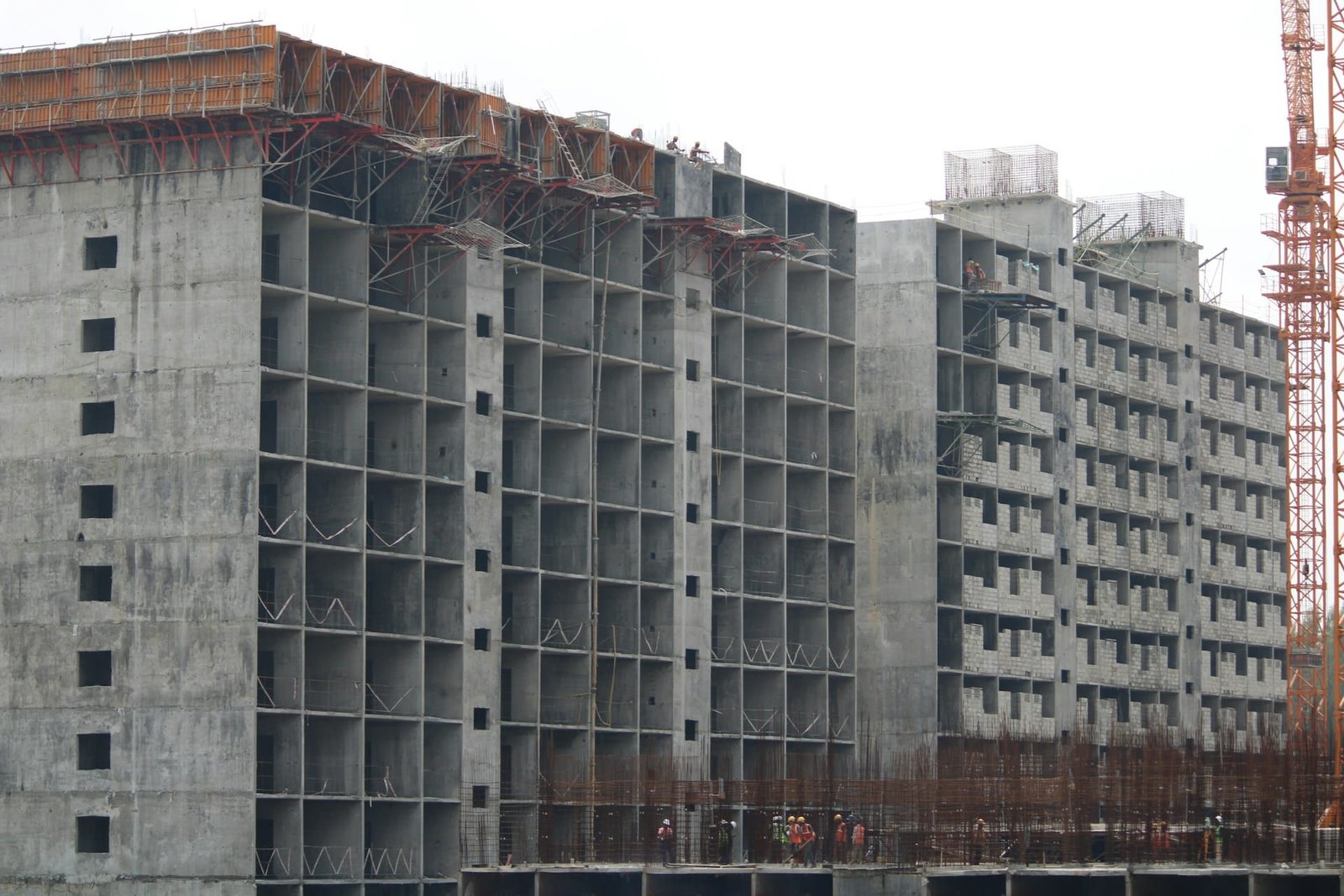
With this method, your crew builds the formwork exactly where the final piece will be. A concrete truck arrives, or workers mix it right there, and pour it directly into these molds. This creates a ‘monolithic’ structure, which means the joints are seamless and the building acts as one solid unit.
This is still the most common method for foundations and complex designs that don’t fit standard measurements. It lets builders adapt to the realities of your specific plot. However, it also exposes your project to the weather. A sudden rainstorm during a pour or extreme heat during curing can weaken the final product. It also depends heavily on your site crew’s discipline to mix and pour everything correctly without a factory supervisor watching over them.
Precast Concrete, The Modern Standard for Speed and Quality
Precast involves making your building’s components, walls, staircases, beams in a dedicated facility. Once they are cured to full strength, cranes lift these finished pieces onto trucks for delivery to your site. This method takes weather completely out of the picture and enforces strict quality standards.
The global precast concrete market is growing fast, driven by a need for efficiency and predictable timelines, according to industry reports from MarketsandMarkets. For a diaspora investor, precast offers a huge mental advantage, you know the components were factory-checked before they ever reached your land. It drastically speeds up assembly, cutting down the time you have to pay for on-site labor. The trade-off is logistics. You need good roads for heavy trucks and cranes, which can be a challenge in some developing areas.
Hybrid Construction
Smart developers often don’t pick just one. A hybrid approach uses cast-in-place concrete for the foundation to ensure stability, then uses precast slabs and walls to build the upper floors quickly. This strategy combines the solid strength of in-situ work with the speed of factory production, offering a balanced solution for many residential projects in Africa.
The 5 Critical Stages of the Concrete Casting Process
Casting is a precise sequence. If a builder skips a step or rushes the job, the concrete will never reach its full design strength.
Formwork Erection and Preparation
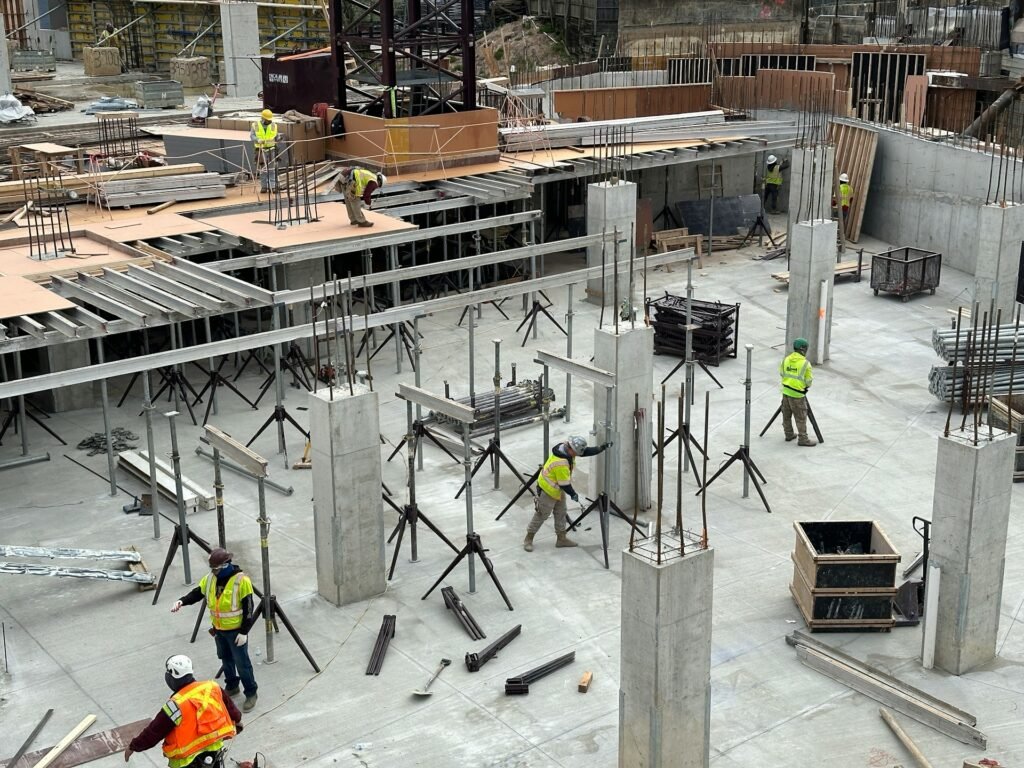
The formwork is the mold that defines the final shape. It must be rigid, watertight, and braced to handle the immense pressure of wet concrete. Before any steel goes in, builders have to coat the inside surfaces with a release agent. This oily substance stops the concrete from sticking to the mold, which would damage the surface when it’s removed. Accuracy here is everything, if the formwork bulges, the wall will be crooked, and the building’s structural integrity will be compromised.
Reinforcement Placement
Concrete is great at handling compression (being squeezed) but terrible under tension (being stretched). Steel reinforcement, or ‘rebar,’ fixes this. Workers place steel bars or mesh inside the formwork according to the structural engineer’s drawings.
This steel acts as a skeleton that handles the pulling forces. A critical detail to watch for is ‘concrete cover.’ The steel must never touch the edge of the formwork, it needs 25-75 mm of concrete surrounding it. Without this cover, moisture can reach the steel, causing it to rust. Rusting steel expands, cracking the concrete from the inside out.
Mixing, Pouring, and Compaction
The concrete mix is prepared and poured into the molds. This has to be done in one continuous session to avoid ‘cold joints’, weak lines that form where fresh concrete meets concrete that has already started to harden.
Once poured, the concrete must be compacted, usually with a poker vibrator. This tool shakes the mix to force out trapped air pockets. The physics here is simple, for every 1% of trapped air, concrete loses about 5% of its strength, as noted by The Constructor, a civil engineering resource. Bad compaction leads to ‘honeycombing,’ a surface full of holes that looks awful and lets water seep into your structure.
Curing and Hardening
This is the step that gets ignored most often on unsupervised sites. Curing is the process of keeping the concrete moist and at the right temperature so the cement can hydrate, the chemical reaction that actually creates strength.
Concrete doesn’t ‘dry’, it cures. It typically gains about 70% of its specified strength in the first 7 days and reaches 90-95% within 28 days, according to Concrete.org. In hot African climates, if the water evaporates too quickly, the reaction stops. The concrete essentially dies, losing up to half of its potential strength. Builders must keep the concrete wet by flooding it, spraying it, or covering it with plastic sheets.
Stripping the Formwork
Removing the formwork is all about timing. Take it off too early, and the structure could sag or even collapse under its own weight. Leave it on too long, and you delay the project and drive up costs. The removal has to be done gently to avoid chipping the corners or damaging the surface of the new concrete.
Essential Materials and Systems
A finished concrete piece is only as good as its ingredients. Knowing what goes into it helps you check the supply list your builder sends you.
The Concrete Mix
The mix is a specific recipe designed for strength.
- Cement – Usually Portland cement, this is the glue that holds everything together.
- Aggregates – Sand and crushed stone make up 60-75% of the volume. They provide the bulk and stability.
- Water – Activates the cement. Too much water makes the concrete weak, too little makes it impossible to work with.
- Admixtures – These are chemicals added to change performance. In hot climates, ‘retarders’ slow down the setting time to keep the concrete workable. In cold weather, ‘accelerators’ speed it up, as explained by Cement.org.
Reinforcement
- Deformed Steel Bars (Rebar) – These have ridges that help them grip the concrete tightly.
- Welded Wire Mesh – Often used in floor slabs to stop cracks caused by temperature changes.
- Fibers – Modern projects sometimes mix steel or synthetic fibers directly into the concrete. This provides reinforcement in all directions, reducing the risk of tiny cracks.
Formwork Systems
- Timber/Plywood – The standard for most home builds. It’s cheap and easy to work with but wears out after 5-10 uses.
- Steel – Heavy and expensive, but it can be reused over 100 times. It leaves a very smooth finish.
- Aluminum – Lighter than steel and also highly reusable, making it popular for large housing projects.
- Plastic, A newer, modular option. It’s lightweight, gives a good finish, and won’t rot.
How Technology is Reshaping Construction
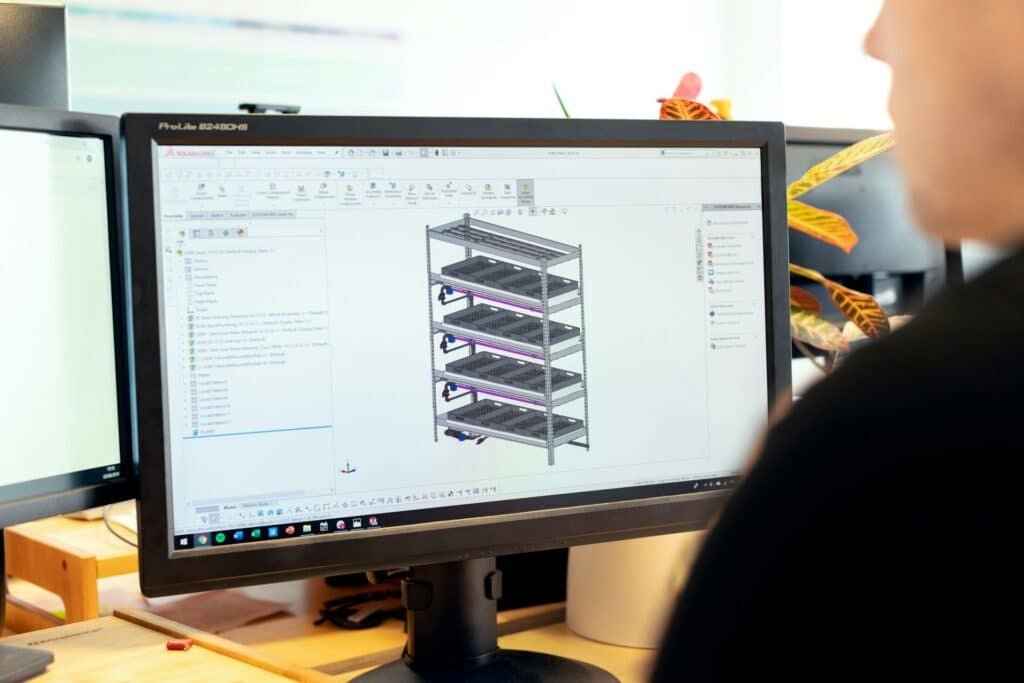
The building industry is finally moving from manual labor to digital precision. These new technologies aren’t just gimmicks, they are real answers to the need for faster, greener, and smarter ways to build.
3D Concrete Printing
Robotic arms can now squeeze out concrete layer by layer, building walls without any formwork at all. This cuts waste and labor costs dramatically. The 3D construction printing market is expected to grow beyond $1.5 billion in the next five years, according to MarketsandMarkets. For investors, this promises homes built in days instead of months, with computer-perfect accuracy.
Self-Healing Concrete
Cracks are the enemy of a long-lasting building. Scientists have created concrete mixes with dormant bacteria or tiny capsules of healing agents inside. When a crack forms and water gets in, these agents wake up and produce limestone that automatically seals the crack. This technology can significantly lower maintenance costs over the building’s life.
Green and Sustainable Concrete
Making standard Portland cement creates about 8% of the world’s CO2 emissions, a statistic confirmed by the Precast/Prestressed Concrete Institute (PCI.org). The industry is now moving toward ‘green concrete,’ which replaces some of the cement with industrial by-products like fly ash. This lowers the carbon footprint without sacrificing strength.
Smart Concrete with IoT Sensors
We can now place tiny sensors directly into structural concrete as it’s being poured. These devices send real-time data on temperature, strength, and stress levels. This tells builders exactly when to remove formwork based on data, not guesswork. It can also alert you to structural problems long before you can see them.
Casting is the heartbeat of your construction project. Whether you choose the flexibility of pouring on-site or the precision of factory-made parts, the integrity of your home depends on how well this process is done. Monitoring a build from thousands of miles away is tough, but knowing what goes into a solid cast gives you the power to demand better.
You shouldn’t have to build on hope alone. At Propy Mould, we close the gap between your vision and the reality on the ground. We provide the expertise, oversight, and technology to ensure your property in Africa is built on verified, high-quality casting standards. Contact us today, and let’s secure your legacy with confidence.
Frequently Asked Questions
What Is The Main Purpose Of Casting In Building?
The main purpose is to turn raw materials into the load-bearing structure that gives a building its shape and keeps it safe. It creates the rigid skeleton, foundations, beams, columns, that transfer the building’s weight to the ground.
This process allows architects to create complex shapes that would be impossible with traditional brick or stone and provides superior fire and weather resistance, as detailed by resources like Concrete.org.
Is Casting The Same As Molding In Construction?
No, though they’re related, they mean different things. ‘Casting’ is the action of pouring and curing the material, like concrete. ‘Molding’ usually refers to creating the formwork itself or to decorative pieces like plaster trim. In short, casting is typically structural, while molding is often for looks. You have to create the mold before you can perform the cast.
What Is The Difference Between Precast And In-Situ Concrete?
The key difference is where the concrete is poured and cured. In-situ concrete is poured on your construction site in its final position, creating a seamless, monolithic structure. Precast concrete is made in a factory and then transported to your site as finished modules.
According to the Precast/Prestressed Concrete Institute, precast offers higher quality control because of the factory environment, while in-situ is more flexible for custom designs but is exposed to weather and other site variables.
How Long Should Concrete Be Cured Before Removing Formwork?
The time depends on the structural part and the type of cement used. For vertical parts like columns and walls, formwork can often come off after 16-24 hours. However, for horizontal parts like beams and slabs that have to support their own weight, the props must stay in place for 7 to 21 days.
As a general rule from industry sources like The Constructor, concrete should reach at least 70% of its specified design strength before supports are fully removed.
What Happens If You Pour Concrete In The Rain?
Pouring concrete in the rain is risky because it can ruin the water-to-cement ratio, which controls the concrete’s strength. Heavy rain can wash away the cement paste on the surface, leaving it weak and sandy. If rainwater mixes into the concrete, it dilutes the whole batch, significantly reducing its final strength.
According to ASTM International standards, builders should immediately cover a fresh pour with tarps if it starts raining and avoid pouring altogether during a downpour.
Why Is Vibration So Important When Casting Concrete?
Vibration is essential for removing trapped air and making the concrete dense and strong. Fresh concrete can contain up to 20% entrapped air, and vibration forces these air bubbles to the surface.
This process, known as consolidation, also ensures the concrete flows tightly around the steel rebar, creating a strong bond. As a result, proper vibration prevents ‘honeycombing’, ugly voids on the surface, and ensures a smooth, solid finish.
Can Casting Be Used For Home Renovations Or Extensions?
Yes, casting is very common for adding structural strength to existing buildings. It’s used for underpinning, which involves casting new concrete foundations to stabilize a sinking house.
It’s also used to create new beams and lintels when removing load-bearing walls for an open-plan layout. For extensions, casting is the standard method for creating new slab foundations for additional rooms or floors.
What Are The Most Common Defects In Cast Concrete And How Can They Be Avoided?
The most common defects are honeycombing, cracking, and segregation. Honeycombing (voids on the surface) is caused by poor vibration or leaky formwork and is avoided by using a poker vibrator and ensuring molds are tight.
Cracking is often caused by the concrete drying too fast and can be prevented with proper curing (keeping it wet). Segregation, the separation of sand and stone from the cement paste, is avoided by using the correct water ratio and not dropping concrete from too high a height.
How Does The Climate In Different African Countries Affect The Concrete Casting Process?
Hot and dry climates create major challenges because of rapid evaporation. The high heat can suck moisture from fresh concrete, causing ‘plastic shrinkage cracks’ to form before it even hardens.
In places like Nigeria or Kenya, this means aggressive and continuous curing (keeping the concrete wet) is required for at least seven days. The heat also makes the concrete set faster, giving crews less time to place and finish it properly, a point often emphasized by resources like Cement.org.
Is Precast Concrete A Good Option For Building A House In Nigeria Or Ghana?
Yes, it’s becoming an excellent option, especially for security and speed. Building with in-situ concrete requires storing cement and other materials on site, which are often targets for theft. Precast elements arrive finished and ready to install, eliminating this risk.
This method also bypasses slow on-site curing times, allowing the shell of a house to be put together in weeks instead of months. Most importantly, it ensures you get the factory-guaranteed concrete strength you paid for, avoiding issues with inconsistent mixing by local laborers.
What Should I Look For To Ensure My Builder Is Performing The Casting Process Correctly?
You should ask for proof, not just promises. Request photos or a video of a ‘slump test’ before they pour. This simple test measures the concrete’s consistency and water content. Insist that they cast test cubes from each batch of concrete.
These cubes are sent to a lab to be crushed after 7 and 28 days to prove the concrete has reached its required strength. Visually, look for small spacers or ‘biscuits’ holding the rebar up. If the steel is sitting directly on the ground or the formwork, the job is already wrong.
How Does The Choice Of Casting Method Affect The Overall Cost Of My Building Project?
The cost difference is a trade-off between material and transport costs versus time and labor costs. In-situ construction usually has lower transport costs, but the labor costs are higher due to longer timelines and the need for more on-site supervision. Precast has a higher upfront cost for the manufactured parts, the heavy transport, and crane rental.
However, it significantly cuts down on-site labor hours and gets the project finished much faster. For diaspora investors, the speed of precast often saves money on financing and starts generating rental income sooner, making it financially efficient.